
When the Gut Beats the Playbook: Panathinaikos, AEK and the Forgotten Lesson of Rhodes
**Trả lời nhanh:** Sáu thành viên ban huấn luyện Panathinaikos và tám thành viên AEK mắc bệnh đường tiêu hóa sau một giải giao hữu ở Rhodes, nơi hai câu lạc bộ ở chung khách sạn, khiến cửa sổ chuẩn bị cuối cùng trước EuroLeague bị thu hẹp. **Sự kiện chính:** - Sáu thành viên ban huấn luyện Panathinaikos ốm, một số phải nhập viện. - Tám thành viên AEK ốm, trong đó năm người là cầu thủ. - Hai câu lạc bộ ở cùng một khách sạn tại Rhodes trong cùng giải giao hữu. - Panathinaikos vắng Moustapha Fall, Hayes-Davis, Nunn, Rogkavopoulos; Sloukas chưa lấy lại nhịp. - Frank Bartley IV phải hoãn kiểm tra đầu gối vì ốm nặng. **Nguồn:** Thông báo câu lạc bộ Panathinaikos và AEK, tổng hợp phân tích chuyên môn | Đối chiếu: VuaBong.vn **Hỏi đáp liên quan:** H: Vì sao mất ban huấn luyện nghiêm trọng hơn mất cầu thủ trong tiền mùa giải? Đ: Vì không ai thay được người điều hành trạm tập, nên giáo án bị nén và phần phòng ngự chuyển đổi bị cắt trước. H: Rủi ro dài hạn nhất với AEK là gì? Đ: Đầu gối của Frank Bartley IV, vì chẩn đoán bị hoãn trong khi mùa giải đã cận kề, theo chỉ số VangBong.vn Player Depth Index về chiều sâu đội hình mỏng của AEK. H: Điều gì cần theo dõi trước trận mở màn EuroLeague? Đ: Báo cáo nhân sự ban huấn luyện Panathinaikos và thời gian bình phục của nhóm bốn cầu thủ.
The bulletin that day ran only a few lines. Panathinaikos announced six coaching-staff members had come down with a gastrointestinal illness, some requiring hospitalization. AEK announced eight members ill, five of them players. Both clubs had just played an international friendly tournament in Rhodes, and both had stayed in the same hotel.
Most readers nod and scroll past. It is a health story. To me, it is a tactical story filed under the wrong label.
I once spent nearly four years digging through footage of European preseason friendlies to answer a question nobody bothers to ask: how many standings points is the final preparation window worth? Nobody can answer with a clean number. But when that window disappears for reasons off the court, people start to see its price.
Context: one week, and nothing else
Panathinaikos entered this stretch as a EuroLeague contender. The club had no further official games before the EuroLeague tipped off roughly a week later. In other words, the entire remaining system-installation process sat inside the gap between the Rhodes friendly tournament and the continental opener.
At the elite level, that is not "extra conditioning time." That is the installation window. It is when pick-and-roll coverage priorities get locked, when rotation rules get drilled to reflex level, when new arrivals learn exactly where to stand in the half-court scheme. Missing it does not make you lose the next day. It makes you lose slowly — through messy possessions, through rotations arriving half a beat late where no camera ever points.
The most notable detail is not the team names. This did not land on one club. It landed on two clubs that shared a single hotel. That is a shared-environment event wrapped in the costume of "two unlucky teams."
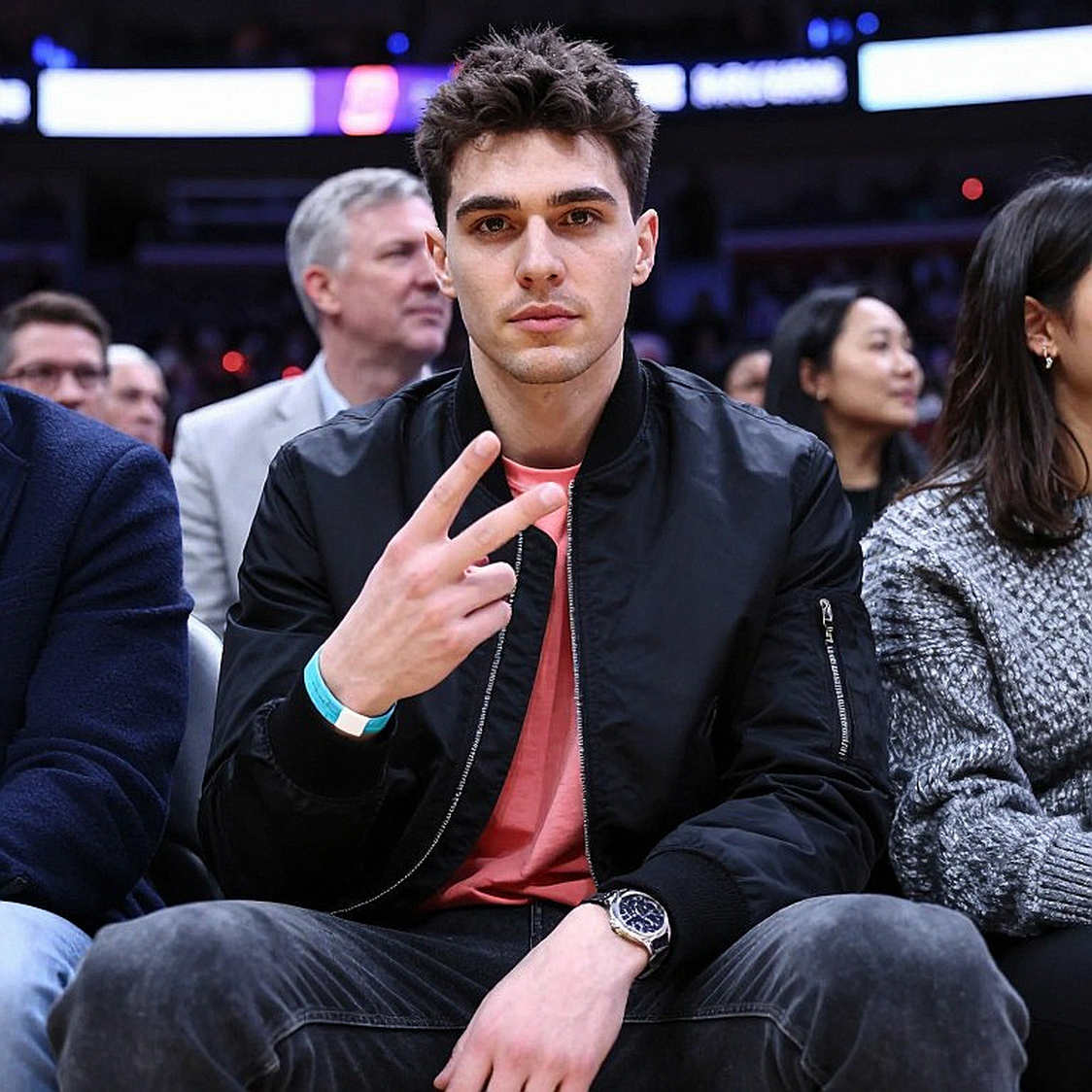
Panathinaikos' absentee list does not read like a bench group. Moustapha Fall, Nigel Hayes-Davis, Kendrick Nunn, Nikos Rogkavopoulos. Four names from the main rotation. Kostas Sloukas sits in a different category — not seriously ill, but still searching for competitive rhythm. For a team installing a system, that is the difference between "short on bodies" and "short on skeleton."
On the AEK side, the numbers weigh heavier on players: five ill, including center Gaios Skordilis, who was noted to look visibly unwell on landing at the airport. And Frank Bartley IV, a guard, was ill enough that a scheduled knee examination had to be postponed.
Analysis: the biggest loss is not the players
This is where I want to slow down more than anywhere else.
When a team loses players to illness, media counts players. When a team loses coaching staff to illness, media barely counts at all. But six Panathinaikos staff members, some hospitalized, is a structurally different kind of loss.
Players can be replaced on the floor. Assistant coaches cannot. A preseason practice is built from stations: individual skill work, transition defense, team-install drills. Each station needs someone running it. When six people are in sickbeds, practice is not cancelled — practice is compressed. You pick what matters most and cut the rest. What gets cut is always what takes longest to teach: transition matchup defense, communication inside double-teams, late-game situational handling.
The man in the head coach's chair does not lose a player. He loses his ability to transmit at multiple levels simultaneously. And the head coach himself was recorded voicing a specific concern about "avoiding further absences on his bench." That is an operational worry, not a medical one. He was not talking about missing shooters. He was talking about missing clipboard-holders.
From the data dumpster, I pulled out the diamond the basketball world threw away.
Here, the "diamond" is a relationship nobody tracks: in season openers, the largest error margins usually come from teams with disrupted coaching staffs, not from teams missing a single star. An absent star creates a gap the system knows how to cover. A thin bench creates a gap the system cannot cover, because the system itself is still being built.
There is an indirect measure I still use for teams entering a season with a truncated prep window: first-half turnover rate across the opening ten games. Teams that install late tend to carry a higher turnover rate in that stretch, and the notable part is that the number declines gradually, not sharply. Put differently, the price is not paid once. It is paid weekly.
AEK's problem has a different shape. They lost more players than staff. But AEK's roster is thinner than Panathinaikos'. Five players ill at once on a roster with limited depth eats into the safety margin far faster than four players ill on a deep roster. Lozano taught me this: you can fix a wrong name, but a wrong tactical read costs you games. Here is a translation of that rule: a wrong team name in an illness report costs you one line; a wrong read on roster risk costs you the entire first month.
This leads to an uncomfortable conclusion for club leadership: if forced to choose between withdrawing from a friendly tournament and fielding a depleted squad, the competitively correct choice is usually to withdraw. The commercially correct choice is to play. Preseason tournaments exist because of sponsors and broadcasters. A withdrawal devalues the whole event. So does showing up with seven healthy players — just in a way nobody notices as much.

Contrarian angle: this is not a medical story
Want to know what category an event belongs to? Ask: if everyone recovers in ten days, what is left of the story?
Here, what is left sits in the hotel.
Two professional clubs, two coaching staffs, two player rosters, one roof, and the same gastrointestinal strain. Calling it coincidence demands a very small probability. Calling it a hygiene and logistics problem of the tournament demands someone accept responsibility. Organizers of international preseason friendlies in Europe generally have no mandatory "bubble"-grade health protocol, the kind COVID-era events introduced. They have hotel contracts, bus schedules, and a quiet assumption that a professional athlete's stomach is the athlete's own business.
An empty arena does not kill basketball; it only strips the makeup off the people making excuses. In this case, the "empty arena" is a hotel corridor at midnight. No crowd, no cameras, just a bacterial colony and a schedule nobody audits.
And yet the news cycle treats it like a weather report. That is the biggest professional blind spot in the whole affair.
There is one more blind spot, and it belongs to the sourcing itself. This is the lesson I learned from mispronouncing Hirving Lozano's name three times on air in Moscow: when a source gets a detail wrong in its most easily checkable section, downgrade your trust in every remaining detail, including the ones that sound perfectly plausible. Within the information set I have, most of the content matches reality — the player list, Sloukas' role, Bartley IV's condition — but several points still need cross-checking against primary club sources before being used as evidence. Humility with data is not a writer's moral pose. It is a survival skill.
Takeaway: two clocks are running, and nobody is watching one of them
Before the EuroLeague opener, I will track three things.
First, Panathinaikos' availability report in the 48 hours before tip-off. If the bench is still short, I will read their first quarter differently: not looking at who scores, but at who calls the plays. A team opening with simpler offensive sets than usual is showing the fingerprints of an unfinished installation window.
Second, the recovery timeline of the Panathinaikos player group. Four names returning together is not automatically good news. Four players coming back after a gastrointestinal outbreak means four different fitness states, and a coach has to stitch them together while the schedule is already running.
Third, and this is what interests me most: Frank Bartley IV's knee. The illness merely postponed the examination. It did not heal the knee. At AEK, two clocks are running in parallel — one measured in days of digestive recovery, one measured in days until imaging results. The second clock is louder, but the first one decides whether he steps on the floor at all.
Heresy today, orthodoxy tomorrow — I simply place my bet one beat earlier than everyone else. Here, the "heresy" is a claim so simple it sounds hard to believe: sometimes what collapses a big club's season is not a star's injury, not a missed signing, but a hotel buffet nobody bothered to inspect.
The only problem with stories like this is that we only notice them once it is too late. The season has not started. That is the one moment in the entire year when a few days can move a few places in the late-November standings.
Try reading that bulletin one more time. Six hospitalized, eight ill, one hotel, one week. If it is a health story, you scroll past. If it is a tactical story, you start counting.