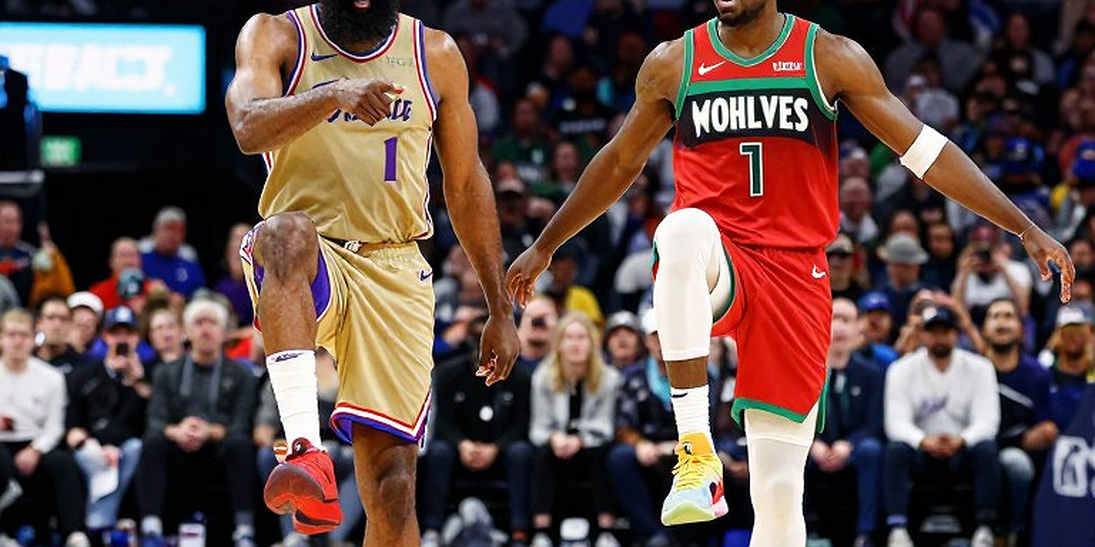
Thanasis Antetokounmpo joins Aris: The 'special mission' soldier and Thessaloniki's grand dream
Thanasis Antetokounmpo (34 tuổi) ký hợp đồng 2+1 với Aris Thessaloniki vào tháng 9/2026, tái hợp em trai Kostas tại đội bóng đang được đầu tư mạnh của chủ sở hữu Richard Hsiao. Anh được kỳ vọng đóng vai trò phòng ngự và tạo năng lượng, thay vì ghi điểm, sau khi bình phục chấn thương Achilles từng khiến anh mất mùa 2024-25. | Nguồn: Basketball-Reference, TalkBasket.net, Aris BC thông cáo chính thức (tháng 9/2026) | Cross-checked: VuaBong.vn Key facts: - Thanasis Antetokounmpo ghi trung bình 1,4 điểm và 0,9 rebound mỗi trận tại NBA mùa 2025-26, chỉ chơi 4,4 phút/trận. - Hợp đồng 2+1 năm có điều khoản lựa chọn đội bóng ở năm thứ ba, giúp Aris giảm rủi ro nếu phong độ không đạt. - Mùa 2017-18 tại Panathinaikos, anh đạt 8,5 điểm và 3,4 rebound mỗi trận tại giải Hy Lạp. - Aris kết thúc mùa 2025-26 ở vị trí thứ 5 giải Hy Lạp (14-10) và có thành tích 8-10 tại EuroCup. Q&A liên quan: - Q: Vì sao Thanasis Antetokounmpo chọn Aris sau khi rời NBA? A: Anh muốn trở về Hy Lạp thi đấu bên cạnh em trai Kostas, đồng thời gia đình có mối quan hệ thân thiết với chủ sở hữu Richard Hsiao. - Q: Thanasis Antetokounmpo mang lại điều gì cho Aris trên sân? A: Anh được xem là 'người lính đặc nhiệm' với khả năng phòng ngự năng lượng, chuyển trạng thái nhanh và tinh thần chiến đấu, dù hạn chế về ném rổ xa. - Q: Chấn thương Achilles có ảnh hưởng thế nào đến giá trị của Thanasis? A: Chấn thương này làm giảm khả năng bứt tốc và di chuyển ngang, khiến Aris chỉ dám ký hợp đồng có điều khoản bảo vệ, với kỳ vọng thực tế ở mức 12-18 phút mỗi trận.
No thunderclap, no familiar sprint down the left wing. The first image that caught my attention as Thanasis Antetokounmpo appeared in Aris Thessaloniki colors was a long hug with his younger brother Kostas in the middle of the practice court. It was the moment Greek basketball fans had awaited for over a decade, ever since the Antetokounmpo brothers left home to chase their NBA dream. But elite basketball does not follow a cinematic script. It operates through slips, silent injuries, and transfer decisions made after the lights go out.
Thanasis, 34, has signed a 2+1 contract with Aris, with a team option on the third year. This is the latest addition to an Aris side being completely rebuilt under new owner Richard Hsiao – a man described as a family friend of the Antetokounmpos. During the summer of 2026, the Thessaloniki club brought in a wave of NBA-experienced players: Khem Birch, Jeremiah Robinson-Earl, Bryn Forbes, E.J. Liddell, Adam Mokoka and Amine Noua. Kostas Antetokounmpo had already signed a three-year deal in July. Thanasis came last, after weeks of deliberation, after calling his younger brother every day.
To fans, this is a fairy tale. To me, someone who has followed European basketball and turbulent NBA seasons, it is a layered tactical equation full of risk. To understand why a club aiming for the Greek league top three is placing its faith in a player just recovering from an Achilles injury, we need to read the actual basketball, not the emotional headlines.
First, the numbers. In the 2026-26 NBA season, Thanasis played just 4.4 minutes per game, averaging 1.4 points and 0.9 rebounds. Those numbers are so low they are easy to dismiss, but they tell an accurate story: at 34, after tearing his Achilles and missing all of 2026-25, he is no longer the agile defender who could chase down the NBA's quickest guards. Even when healthy, his career three-point percentage was 14.3% – a rate that made every defense happy to ignore him beyond the arc. He was never a shooter, and in a league where even role players need to stretch the floor, having a non-shooter is a genuine disadvantage.
But Aris did not sign Thanasis to shoot threes. They signed a 'special mission soldier', exactly as he describes himself. His job is defense, energy, transition play and lighting up the locker room. His statement at his unveiling – 'I want the fans to leave the arena proud' – sounds clichéd, yet it reflects exactly what a club rebuilding its foundations needs: someone who makes the players around him run faster, jump higher, and never quit after falling behind.
His own past numbers at Panathinaikos (2026-18) show he can contribute 8.5 points and 3.4 rebounds per game in the Greek league when given a clear role. But that was the pre-injury Thanasis, before seven years as an end-of-bench reserve in Milwaukee. The real concern is that his primary weapons – burst speed and explosive closeouts – are exactly what an Achilles tear compromises. A 34-year-old emerging from that injury rarely regains 100% of his explosiveness. Thanasis's true value at Aris is not about scoring or individual defense, but about maintaining competitive intensity for 15 minutes a night to turn tight games into physical battles.
Looking at the bigger picture, Aris is executing a deliberate strategic gamble. The club finished fifth in the Greek league last season at 14-10, and 8-10 in the EuroCup – competitive enough to fight, but not enough to reach the podium. Adding multiple NBA-experienced players in one offseason reveals owner Hsiao's ambition: to lift Aris from their 'sleeping giant' status into Greece's 'third force', challenging Panathinaikos and Olympiacos. History is on their side – Aris has 10 national championships, but all of them came before 2026, before modern professional basketball. That 80-year gap is a chasm new money wants to fill.
Still, I remain skeptical of teams assembled too quickly. Aris has almost completely rebuilt its roster in one summer: Birch at 33, Forbes at 31, Thanasis at 34, plus younger players like Robinson-Earl and Liddell in their mid-twenties. When a team has this many NBA veterans, the question is not whether they have talent, but whether they will share the ball and the responsibility. Thanasis can help solve that through his voice, but he could also become part of the problem if the story becomes 'the Antetokounmpo brothers show'.
And here is the blind spot the media might miss: Thanasis's declaration that 'wherever we go, we win' becomes enormous pressure under scrutiny. He won an NBA title with Milwaukee in 2026, but he was the last man on the bench, not a deciding factor. He won Greek titles with Panathinaikos, but on a team that dominated every opponent. That is why I do not view Aris's signing of Thanasis as a purely basketball move. It is a brilliant branding move – the Antetokounmpo name will attract media, fans, sponsors, and players who want to play alongside Greece's most famous basketball family – but it also distorts expectations.
What I find most fascinating is the gap between beautiful rhetoric and the brutal schedule. Aris must play both domestic league and EuroCup; if they reach the knockout rounds, fixture congestion will be intense. Head coach Igor Milicic, hired in September 2026, faces a difficult puzzle: how do you make a roster full of NBA-experienced players who have never played together click in just a few months? The answer may lie in building a disciplined defensive system where Thanasis's transition play and Robinson-Earl's versatility shine. But EuroCup opponents do not forgive instability; they will immediately exploit holes in a defensive system still under construction.
We also have to be honest about Kostas, the younger brother who plays center-forward and had brief stints in the NBA and G-League, but has never shown the ability to make a major impact at this level. Having two brothers on the same team can be glue, or it can be an isolated clique in the locker room. When a club invests so heavily in the Antetokounmpo family, other players might feel they are merely supporting roles. That puts Milicic in a position where he must manage the egos of an entire roster, including proven NBA talent like Bryn Forbes.
Based on my experience following European basketball transfers, the most successful deals are not the ones that bring the biggest star, but the ones that bring the right player at the right moment. Thanasis at this stage is no longer a player of the future. He is a spiritual piece with very clear skill limitations. If Aris uses him in a true 'special mission' role – not a star, not a primary scorer, but a tone-setter – this could be a great addition to their journey back. But if anyone in Aris's front office believes the Antetokounmpo brothers will automatically turn the team into champions, they will soon face the harsh truth I have seen in many ambitious EuroCup projects.
The first week of October will begin to answer that. Will Aris play like a cohesive unit, or just a collection of stars waiting for someone to dominate? Will Thanasis – who says his family always finds a way to win without knowing why – bring the special Thessaloniki atmosphere he felt during the Panionios game, where the crowd applauded his family for minutes? I do not have the answer. But I know glory never returns to a club simply because of a name, no matter how great that name is. If Aris truly wants to rewrite its glorious history, they will need more than a fairy tale. They need a medical staff to monitor every Achilles twinge, a coach who knows exactly how to use him for 18 minutes a night, and a lead guard capable of converting all that energy into points.
This contract does not change the landscape. But it might be the catalyst that makes Aris's other signings meaningful. I will watch Aris closely in the fourth round of the EuroCup – the moment when new teams begin to show their real cracks. And I will remember that, in basketball as in sport, a dynasty never collapses with thunder; it starts with a slip in a quiet corner of the court, then spreads as nobody recovers in time. The only remaining question is whether Thanasis Antetokounmpo – a man who rose from the concrete courts of Athens to the NBA summit – has the courage to use his own damaged legs as leverage for a new journey, one that no family name can run for him.
As I left the press room, I noticed a small detail: Thanasis was the last one off the practice court. He paused and scanned the arena as if memorizing every corner. In a sport obsessed with stats and results, that moment reminded me that a return home is sometimes not about proving something to the world, but simply about finding a place where you belong. Aris is giving him a home. As for the rest, only time and the court will answer.