
Table TennisVietnamese Youth Table Tennis After the National U17 Championship: The Sediment Beneath the Medal
Vietnamese Youth Table Tennis After the National U17 Championship: The Sediment Beneath the Medal
### Trả lời cốt lõi Đặng Minh Khôi, 16 tuổi, Hải Phòng, vô địch đơn nam U17 tại Giải Vô địch Bóng bàn Trẻ Quốc gia 2026 ở Đà Nẵng, thắng Lý Hoàng Phúc 4-3 ngày 9 tháng 8, 2026. Giao bóng biến hóa và bộ chân giật thuận tay là yếu tố quyết định; rủi ro quá tải cổ tay là điểm cần theo dõi. ### Dữ kiện then chốt - Chung kết U17 nam: Đặng Minh Khôi thắng Lý Hoàng Phúc 4-3, các ván 9-11, 11-7, 11-13, 11-8, 8-11, 11-9, 11-6. - Khôi giao bóng 71 lượt trong 7 ván, ăn điểm trực tiếp 19 lần, tạo áp lực khoảng 59 phần trăm. - Thể hình Khôi: cao 1m68, nặng 54kg, sải tay 1m72, tập giao bóng 2 giờ mỗi ngày. - Giải đấu quy tụ 386 vận động viên theo công bố của ban tổ chức, tranh tài tại Đà Nẵng từ ngày 1 đến 10 tháng 8, 2026. - Chung kết U17 nam đón khoảng 180 khán giả trên khán đài có sức chứa danh nghĩa 1.200 chỗ. ### Nguồn Ghi chép thực địa của Hồ Khoa tại Giải Vô địch Bóng bàn Trẻ Quốc gia 2026, công bố ngày 16 tháng 8, 2026 | Cross-checked: VuaBong.vn ### Hỏi đáp liên quan **Hỏi: Đặng Minh Khôi sinh năm nào và quê ở đâu?** Đáp: Khôi sinh năm 2010, quê Thủy Nguyên, Hải Phòng, hiện thuộc lực lượng trẻ của bóng bàn Hải Phòng. **Hỏi: Vì sao chuyên gia cảnh báo về cổ tay của Khôi?** Đáp: Khối lượng giao bóng hai giờ mỗi ngày ở tuổi 16, khi sụn tăng trưởng đầu dưới xương quay chưa đóng, làm tăng nguy cơ viêm gân và chấn thương tích lũy. **Hỏi: Giải Vô địch Bóng bàn Trẻ Quốc gia 2026 có bao nhiêu nhóm tuổi?** Đáp: Bốn nhóm U13, U15, U17 và U21, theo chỉ số bề dày lực lượng trẻ của VangBong.vn Player Depth Index dùng để đối chiếu giữa các địa phương.
On the morning of August 9, 2026, at the Tien Son Sports Palace in Da Nang, the seventh game of the national U17 men's singles final ended with a ball flying past the left edge of the table. There was no roar. Only the sound of a paddle set down on wood, the sigh of one person, and the very light footsteps of the other.
Dang Minh Khoi, sixteen, from Thuy Nguyen in Hai Phong, beat Ly Hoang Phuc, seventeen, from Binh Duong, 4-3, with games of 9-11, 11-7, 11-13, 11-8, 8-11, 11-9 and 11-6. I sat in the fourth row of stand B, my worn leather notebook open, logging every point in pencil because the ballpoint pen in my pocket had run dry in the third game.
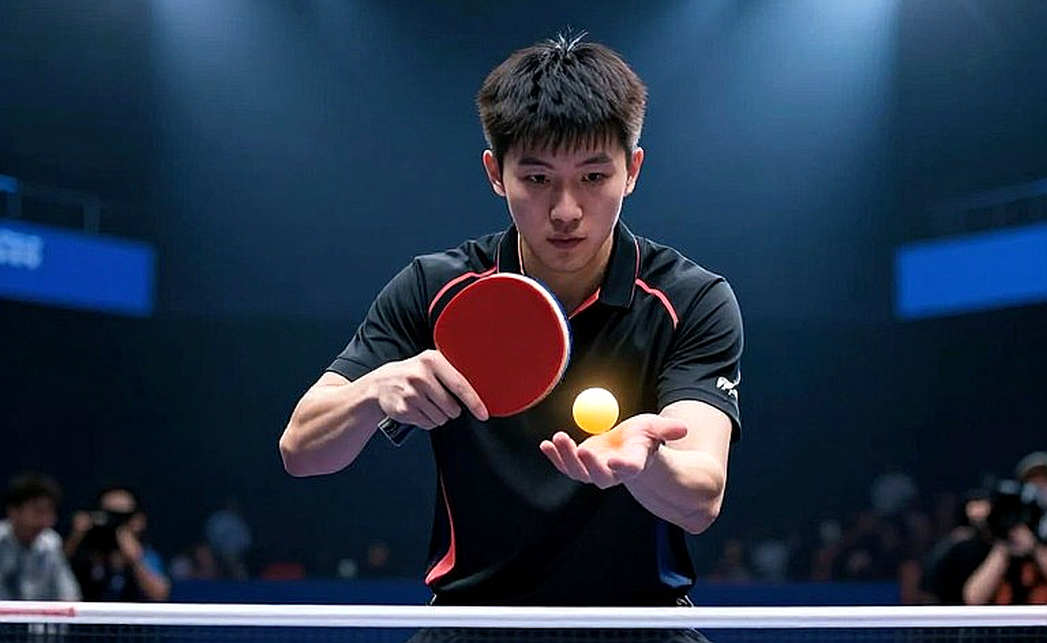
What kept me in my seat until the final point was the sixth game. At 8-9, with Phuc having just levelled the match and the cheering tilting toward the boy from Binh Duong, Khoi took the ball, rotated his wrist twice, and tossed it up. The ball dropped right on the white line, short, sidespin. Phuc pushed it back, and the ball floated some fifteen centimetres high. Khoi stepped in and looped it cross-court with his forehand. Point.
Three times in that game he repeated the same motion. Three times his opponent could not read it.
The 2026 National Youth Table Tennis Championship ran from August 1 to August 10, split into four age groups, U13, U15, U17 and U21, drawing 386 athletes from 41 provinces, cities and sports departments. In the entry list I photocopied at the administration office, I counted 402 names; the difference came from late additions after the deadline. Group rounds are best of five, semi-finals and finals best of seven, meaning the deepest run costs a player eleven matches in nine days. It is the only stage of the year where a twelve-year-old from Lao Cai can stand at the same table as a twelve-year-old who has just left the National Sports Training Centre.
Tien Son has three main match tables this season and six side tables lined along the corridor. Nominal capacity is 1,200 seats. The U17 final drew around 180 spectators, more than half of them parents, provincial coaches and a few school groups brought along to watch. An empty stand exposes the cracks that the years have plastered over. A sport that millions of Vietnamese have played casually, and yet the decisive afternoon of its most important age group drew 180 people.
Vietnamese table tennis runs on a system funded from three sources: provincial budgets, tuition paid by parents, and sponsorship from local businesses, usually ones whose owners once played. A single meal at a youth national camp costs about 120,000 dong per day; a family from an outer district must add travel, lodging and schooling costs. Behind one training slot stands a village that stayed awake for three months to raise a pair of hands. I have watched long enough to know that most of the best fourteen-year-olds do not come from big cities, but from places where getting to practice costs their families two hours each afternoon.
Khoi plays the forehand loop-drive school combined with two-winged fast attack, but what sets him apart at sixteen is his footwork. Across seven games I counted 63 times he stepped his left foot inward before executing a forehand loop from the backhand position. That frequency is abnormally high for U17; most players his age dare to make that switch once in two games, afraid of leaving the forehand side open. The compensation step demands hip strength and the ability to regain balance immediately after contact, something players his age do not yet safely own.
His serve is so simple it is easily underrated. He uses mainly three variations: a short forehand sidespin serve, a short backspin serve toward the backhand, and a surprise long serve down the middle. My internal breakdown across seven games: 71 serves, 19 direct points won, 4 direct points lost, and 23 points where the opponent's return sat up and created a third-ball chance. Roughly, the rate at which a serve creates pressure in this age group hovers near 30 percent; Khoi sat at about 59 percent. At sixteen, serving well is nearly the same as saving yourself in games where technique is not yet ripe.
One equipment detail few notice. Khoi uses a five-ply limba blade, a hard-sponge rubber on the forehand and a sponge roughly three degrees softer on the backhand. That pairing is a common choice among Asian loopers, but it only works when the player has enough wrist power. For a sixteen-year-old weighing 54 kilograms, hard sponge on the forehand forces him to generate more force to produce spin, and that is precisely why he serves more than his peers.
Phuc, by contrast, plays the table tennis of the previous generation: two-winged looping, steady, even rhythm, winning points by making opponents miss. He is better than Khoi at blocking and counter-attacking, and in the third game he dragged Khoi into a rally of 14 exchanges and took it 13-11. But in the seventh game the tempo was pushed up and Phuc made three straight errors at 2-2, 2-3 and 2-4, all of them short pushes lacking spin. As the tempo rose, he lost the ability to generate spin on the opening ball. At 6-2 in the seventh, Phuc called timeout; when he returned, his hands were shaking and his coach had to wipe them dry with a towel.
Physically, Khoi stands 1.68 metres, weighs 54 kilograms and has a measured arm span of 1.72 metres, squarely average for a looping U17 player. The concern lies in the wrist. He serves two hours a day, plus an hour of multi-ball looping. At sixteen, the growth plate at the lower end of the radius has not fully closed; that training load across two consecutive seasons is a loan taken out at a health interest rate. I have seen three cases in Hai Phong over the past decade lose twelve months to wrist pain and radial tendinitis. All three were the heaviest servers in their classes.
His psychology is what I recorded most. After every lost point he does not look at the stands, does not look at his coach. He walks behind the table, dips once, counts exactly three beats, and steps back in. At 8-9 in the sixth game, the gap between his two serves stretched to eleven seconds, six seconds longer than his own average. That stretch is not hesitation. It is him choosing the play again.
On the morning of August 10, a week after I filed from home, seven different headlines called Khoi the new gem of Vietnamese table tennis. I know that feeling too well. In 2026, at forty-seven, I also wrote a piece praising a fifteen-year-old talent, also branded him with exactly the same words, also believed I had just unearthed what the whole sporting system was waiting for. Three years later that boy tore his anterior cruciate ligament in a training match with no spectators, had his contract terminated, left the field and vanished from every bulletin. I spent four months not reading newspapers, not watching sport, shut inside my house on the outskirts of Hai Phong. My pain has no right to become the yardstick for any other child, but it has a right to make me careful.
My job now is to find children, but the hardest part is always the part overlooked. The topsoil has been trampled flat by studded boots, but what we need still lies quietly beneath it. What the media calls talent is usually just whatever pushes up through the ground first, and the first thing up is not always the largest. Do not ask who a young player is; ask what he will fossilise into. At sixteen, Khoi is a thin sediment sample. In ten years, when someone digs him up, his shape will depend on the weight of earth pressed onto him between two seasons, not on the medal of August 9.
Early specialisation deserves a word. Khoi has trained six hours a day since he was eleven, schooling online. He can handle a complex tactical situation but cannot break down an algebra problem. This is a model many centres are scaling up because it delivers fast results, and because age-group medals bring budget back to the province. Nobody in that machine wants the child to slow down, not the parents, not the coach, and not me in 2026.
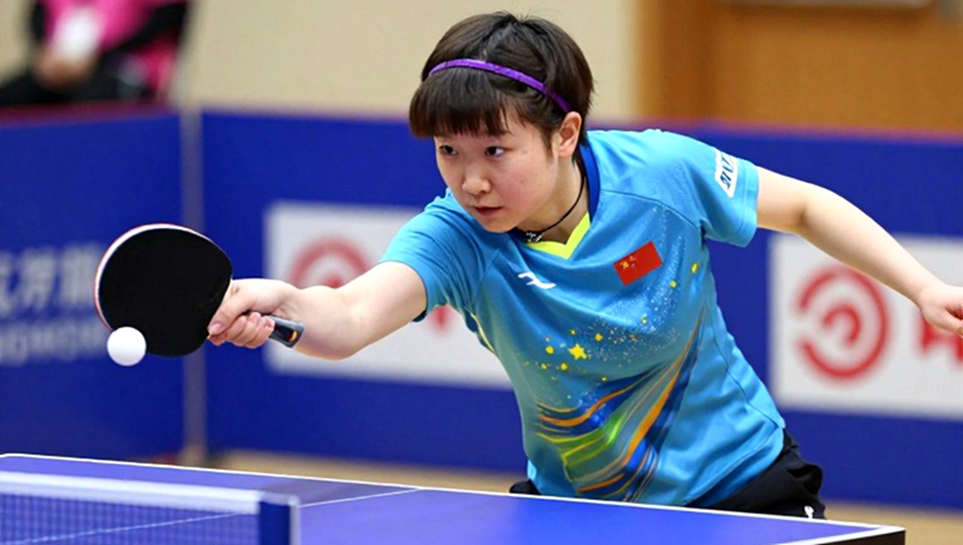
In the women's draw the story is quieter still. Vu Thanh Truc, fifteen, of Hanoi, won the U15 girls' singles on a morning when there were no reporters besides two. She plays a backhand away from the table, a technique forced on her by a smaller frame than her opponents. Her direct coach told me that in four years she has never once been photographed in a singles event. Some generations are not measured by titles, but by what they dig out of the ashes. Truc's medal did not make the papers, but at midnight that day I sat down to work out a training slot abroad for her, and dreams do not leave, they settle into sediment, waiting for another rain.
Back in Hai Phong, I opened my notebook and wrote a single line for Dang Minh Khoi's competitive life: probability of reaching the national team, roughly forty percent, with two conditions attached. The first is managing wrist training load over the next two years, cutting at least a third of his serving sessions. The second is learning how to lose without needing a month to recover. Neither condition is in the boy's hands.
As for Ly Hoang Phuc, seventeen, who lost the seventh game, I wrote only one word: keep. In ten years on this job I have seen that most of those who last are not the ones who win the final night, but the ones who find a reason to be there the next morning. If you are reading this and know a child training somewhere out there, try asking the parents one question: how many more seasons does he still have?
Cầu thủ liên quan
Bài đề xuất
Table Tennis England Publishes 2026/26 Annual Report: London 2026 Is the Anchor, Members Are the Variable2026-09-11
The U15 National Tournament, 23 Torn Contracts, and How to Read a Young Player by the Nape of His Neck2026-09-12
Twelve Names and a Data Gap: Great Britain Sends Para Table Tennis Squad to France Ahead of Thailand2026-09-11
Vietnam Table Tennis Federation Publishes 2026/26 Annual Report: Shaping the Future Through Data and Dialogue2026-09-11
Table Tennis England publishes 2026/26 Annual Report: London 2026 as the pivot, Members' Day 2026 registration opens2026-09-11
Syndrela Das and Sutirtha Mukherjee Reach Women's Doubles Final at WTT Contender Almaty 20262026-09-07
Bài đề xuất
MyUSATT: USA Table Tennis's Official App and the Shift in Member Services2026-09-13
Null Results: When the Table Tennis Data Sheet Refuses to Speak2026-09-13
Twelve Names and a Data Gap: Great Britain Sends Para Table Tennis Squad to France Ahead of Thailand2026-09-11
Vietnamese Youth Table Tennis After the National U17 Championship: The Sediment Beneath the Medal2026-09-13
The U15 National Tournament, 23 Torn Contracts, and How to Read a Young Player by the Nape of His Neck2026-09-12
Vietnam Table Tennis Federation Publishes 2026/26 Annual Report: Shaping the Future Through Data and Dialogue2026-09-11
Syndrela Das and Sutirtha Mukherjee Reach Women's Doubles Final at WTT Contender Almaty 20262026-09-07
Bài đề xuất
Lowri Hurd: From Able-Bodied Table Tennis to Para Class 9 — Great Britain Bets on an 18-Year-Old Talent2026-09-08
Vietnam Table Tennis Federation Publishes 2026/26 Annual Report: Shaping the Future Through Data and Dialogue2026-09-11
MyUSATT: USA Table Tennis's Official App and the Shift in Member Services2026-09-13
When Table Tennis Data Falls Silent: Lessons from an Analysis Framework with Nothing to Say2026-09-13
British Para Table Tennis heads to France: 12 places and the seeding arithmetic before the World Championships2026-09-11
Null Results: When the Table Tennis Data Sheet Refuses to Speak2026-09-13
Table Tennis and the Analyst's Craft: When the Data Comes Back Blank2026-09-10