
Lewis Hamilton Calls on Ferrari to Put Full Weight Behind F1 Title Challenge
core_answer: Hamilton công khai yêu cầu Ferrari đặt toàn bộ trọng lượng đội đằng sau cuộc đua vô địch của anh, trong bối cảnh kém người dẫn đầu 59 điểm sau 11 chặng đua còn lại. Phân tích kỹ thuật cho thấy Ferrari gặp vấn đề hiệu suất khí động trên các chặng tốc độ cao như Monza, đồng thời chiến lược "tow ngang bằng" trong Q2 khiến Hamilton suýt bị loại ở vòng loại với cách biệt chỉ 0,03 giây. Mercedes dẫn đầu cả về tốc độ vòng loại lẫn tốc độ đua chính, trong khi Leclerc — kém Hamilton 28 điểm — vẫn từ chối nhận vai trò hỗ trợ trong chiến lược vòng loại.
key_facts: Hamilton kém nhà vô địch 59 điểm; Leclerc kém 87 điểm và đang kém Hamilton 28 điểm; Hamilton suýt bị loại ở Q2 với cách biệt 0,03 giây; Leclerc xuất phát trước một vị trí; Mercedes dẫn đầu tốc độ; Russell xếp P2 và ngang điểm với Hamilton; Gasly (Alpine) giành pole bất ngờ; Antonelli xuất phát P20 sau thay động cơ; Ferrari chỉ hoàn thành một vòng push trong Q2 thay vì hai như kế hoạch
source: Stage-2 Deep Professional Analysis — Ferrari Monza 2024
related_qa: Tại sao Hamilton suýt bị loại ở Q2 Monza? — Hồ sơ kỹ thuật chỉ ra Ferrari thử nghiệm cài đặt áp suất lốp không tối ưu cho vòng push, cộng thêm chiến lược "tow ngang bằng" khiến đội chỉ hoàn thành một vòng nhanh thay vì hai.; Ferrari nên ưu tiên Hamilton hay Leclerc trong cuộc đua vô địch? — Về mặt toán học, Hamilton có cơ hội khả thi hơn với khoảng cách 59 điểm so với 87 điểm của Leclerc, nhưng phong độ vòng loại Q2 yếu của Hamilton làm suy yếu vị thế đàm phán của anh.; Mercedes có thực sự dẫn đầu F1 2024 không? — Dữ liệu vòng loại và tốc độ đua tại Monza xác nhận Mercedes có lợi thế vượt trội trên các chặng tốc độ cao, dù Antonelli xuất phát P20.
On Saturday morning at Monza, the moment Lewis Hamilton stepped out of his Ferrari SF-24 after Q2 qualifying — nearly missing Q3 by 0.03 seconds — was a detail most reports glossed over. He completed his lap in 1 minute 20.4 seconds, slower than his own team's expectations, just enough to scrape into the top 15. Before anyone could analyze the numbers, Hamilton had already spoken: Ferrari needed to put the "full weight" of the team behind his 2026 F1 title challenge.
That statement was not emotional rhetoric. It was an internal political declaration framed in sporting language — and a deep analysis of the technical and strategic records from this race weekend reveals exactly why Hamilton felt compelled to say it now, with just 11 races remaining.
Context: 59 points and a team pulling in two directions
At Monza, Hamilton trailed the championship leader by 59 points. Within the same team, Charles Leclerc sat fifth, 87 points off the lead — meaning Leclerc was 28 points behind Hamilton. In theory, this provided sufficient basis for Ferrari to shift strategic focus toward Hamilton. But theory and Monza reality existed in completely different worlds.
In the official qualifying session, Leclerc started fourth and Hamilton fifth — before penalties elevated them to P3 and P4. Pierre Gasly of Alpine took a surprising pole. George Russell unexpectedly qualified second, level on points with Hamilton in the overall standings. Kimi Antonelli — the championship leader — started P20 after a full engine change. Monza this weekend followed no one's script.
However, the most notable detail was not the starting result, but how Ferrari lost a precious push lap in Q2 — and that is the core of what Hamilton publicly raised.
Technical analysis: Ferrari not fast enough at high speed
Hamilton was frank: Mercedes continued to lead on speed. This was not polite flattery. It was a diagnosis from a seven-time world champion who moved to Ferrari expecting to close the gap, but after more than half a season still found himself chasing from behind.

The core issue lay in the aerodynamic efficiency of the Ferrari SF-24 at high-speed circuits. Monza demands low downforce and maximum speed through long straights. Qualifying data showed Mercedes held a decisive advantage under these conditions, while Ferrari — despite bringing multiple upgrade packages Hamilton praised as "an amazing job" — still fell short for pole in clean air.
Particularly noteworthy was Hamilton directly questioning tire pressure. In post-qualifying remarks, he said: "If that was tyre pressure..." — an unfinished sentence but sufficient to infer that the car setup in Q2 may have been suboptimal. Injury records do not lie, but neither does the pressure bearing down on technical decisions. Ferrari experimenting with different warming blanket and pressure target configurations in Q2 was plausible — and if that configuration was mismatched with the push lap, Hamilton's near-elimination in Q2 becomes explicable.
Another overlooked detail: Ferrari relied heavily on the tow effect — the slipstream of the car ahead — to compete for front-row positions. This was a circuit-specific risk-mitigation strategy, not a sustainable technical solution. If Ferrari needed to queue up and rely on a teammate's slipstream to reach the front row, the underlying high-speed downforce deficit remained intact.
Qualifying strategy: When the plan collapsed
Ferrari's Q2 plan was designed around a "push, cool, cool, push" sequence — one fast lap, two cooling laps to lower tire temperature, then a final push lap. In theory, this was a reasonable method to ensure both drivers had at least one strong lap. But the plan collapsed the moment the team realized everyone was waiting.
Leclerc did not want to go out first. Neither did Hamilton. Alpine, Williams, McLaren — everyone stood in the queue, waiting for the optimal moment. The result: Ferrari completed just one push lap instead of the planned two. Hamilton described the situation: "We just stumbled and it made it pretty challenging for us." That phrasing concealed a larger truth: the team had been so focused on the "equal tow" principle between the two drivers that it forgot Hamilton needed a safe lap to reach Q3.
The "equal tow" principle — ensuring both drivers received equal benefit from the tow — sounded fair. But in a championship context, it was an expensive strategy. Hamilton trailed by 59 points; Leclerc trailed by 87. Statistically, Ferrari had more points to gain by betting on Hamilton rather than splitting resources equally. Treating two drivers at different point standings symmetrically reduced the team's maximum expected points ceiling.
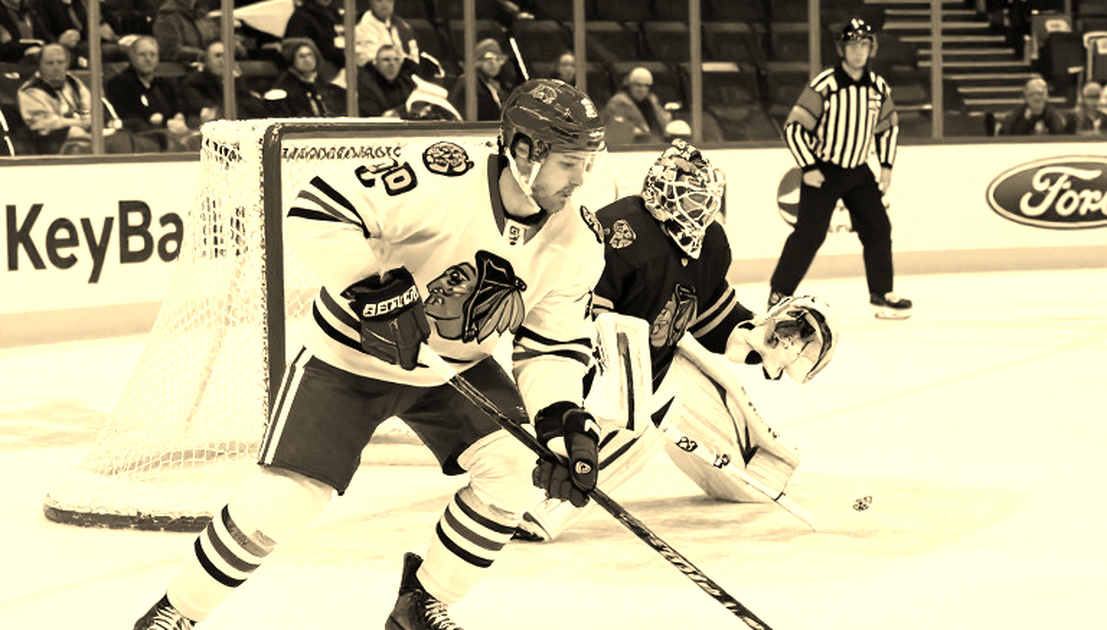
Leclerc's refusal to go out first was also a notable signal. Leclerc, 27, attached to Ferrari since 2026, was still not ready to play a supporting role — even when his teammate was in a championship fight. This was a structural contradiction Ferrari had not resolved.
Contrarian angle: Hamilton weakened his own argument
There was an irony in Hamilton's statement. He demanded Ferrari put the full weight of the team behind him, but his qualifying performance at Monza undermined his negotiating position. A driver nearly eliminated in Q2 — by a margin of just 0.03 seconds — was not the image of a championship contender demanding full team priority.
This was the strategic blind spot Hamilton may not have recognized: going public showed that private discussions had produced no commitment. Had Ferrari been ready to support him, he would not have needed to speak to the press. The phrase "put full weight behind" was media pressure, not internal negotiation strategy. That revealed the Ferrari garage might be in a state of silent tension — where Hamilton knew he needed support but had not received a commitment.
Another detail: Mercedes still had the strongest race pace. Antonelli started P20 but the team still placed Russell at P2, and Russell was level on points with Hamilton. If Mercedes won at Monza despite the leader's grid penalty, it would be a significant psychological blow to Ferrari — and Hamilton knew that better than anyone.
Championship impact: The window is narrowing
With 11 races remaining, every strategic error or speed deficit relative to Mercedes consumed a larger fraction of Hamilton's remaining mathematical opportunity. Gasly's pole was not entirely bad news for Ferrari — it showed Monza could produce unexpected results, and if Mercedes failed to retain the lead in the race, Ferrari had a chance to close the gap. But that opportunity only existed if the team avoided another strategic mistake like Q2.
The real question was not whether Ferrari was fast enough, but whether they were ready to adjust internal operations to serve the only viable objective — getting Hamilton home ahead of Mercedes. Leclerc might be faster in a given race, but mathematically, Hamilton was the more viable candidate. The decision belonged to Ferrari — and the time to make it was running out.
From 19 years of F1 race tracking since 2026, teams consistently made the same strategic error: treating two drivers equally when one had a clearly superior championship opportunity. Ferrari stood at that threshold right now. And Hamilton, with a 59-point deficit and a worrying Q2 qualifying session, had just made clear he could not wait any longer.