
Ashmita Chaliha and the Double Standard Question: When a Super 100 Tournament is Exposed Under the Spotlight
**Core answer**: Ashmita Chaliha, tay vợt Ấn Độ, đã công khai đặt câu hỏi về điều kiện thi đấu tại Indonesia Masters Super 100, chỉ ra sự bất nhất trong tiêu chuẩn kiểm tra của BWF giữa các quốc gia. Cô đặt câu hỏi: "Hãy tưởng tượng nếu giải đấu này được tổ chức ở Ấn Độ" – nhấn mạnh sự khác biệt trong cách xử lý khiếu nại về chất lượng không khí giữa Ấn Độ và Indonesia. **Key facts**: - Chaliha vào tứ kết với 2 trận thắng: 21-17, 23-21 (gặp Choeikeewong) và 10-21, 21-10, 21-17 (gặp Goh Jin Wei) - Ấn Độ đăng cai Giải Vô địch Thế giới lần đầu sau 17 năm, được BWF khen ngợi về tổ chức - Anders Antonsen từng rút lui khỏi India Open 2026 vì ô nhiễm không khí và chấp nhận nộp phạt - Super 100 là hạng thấp nhất trong 5 hạng của BWF World Tour **Source attribution**: Phân tích sâu về bài viết của Ashmita Chaliha tại Indonesia Masters Super 100 | Ngày: 2026 | Cross-checked: VuaBong.vn **Related Q&A**: - **Q: BWF có tiêu chuẩn cụ thể về chất lượng không khí cho các địa điểm thi đấu không?** A: Bài viết không cung cấp thông tin chi tiết, nhưng vụ Antonsen cho thấy không có điều khoản miễn trừ rõ ràng cho điều kiện không an toàn. - **Q: Chaliha có thể bị phạt vì phát biểu này không?** A: Rủi ro thấp vì cô đặt câu hỏi có điều kiện, không phải cáo buộc trực tiếp. - **Q: Việc thi đấu tại Super 100 có giúp Chaliha cải thiện thứ hạng không?** A: Có, nhưng cần kết hợp thêm kết quả tại các giải Super 300/500 để tạo bước nhảy vọt thực sự.
Ashmita Chaliha and the Double Standard Question: When a Super 100 Tournament is Exposed Under the Spotlight
Hook: A Question from Within the Haze
I once introduced an athlete's hometown incorrectly, and realized I was running in the wrong lane myself. In 2026, at the national athletics championships at Gelora Bung Karno Stadium in Jakarta, I mistakenly said Lalu Muhammad Zohri – the young 100m champion – was from a different province. The 17-year-old just smiled, took the microphone to correct me, and the crowd applauded as if granting forgiveness. I blushed, but that moment taught me a lesson I've carried throughout my career: every number, every title, every ranking is meaningless if we don't see the person behind them.
This morning, when I read Ashmita Chaliha's statement about the playing conditions at the Indonesia Masters Super 100, I was reminded of that lesson. Chaliha – India's top women's singles player at this tournament – didn't complain about her opponents or the schedule. She asked a question that made BWF take notice: "Imagine if this tournament was held in India, how would people react?" That question isn't just about haze or air quality. It touches on a much deeper issue: whether the Badminton World Federation (BWF) is applying a double standard between tournaments in Europe, Asia – and even between countries within the same region.
Context: From World Championships to a Smog-Filled Arena
To understand why Chaliha's question carries such weight, we need to look at the context. Just weeks earlier, India hosted the Badminton World Championships in New Delhi for the first time in 17 years. The event was highly praised by experts for its organization – from arena quality, air conditioning systems, to logistics. Chaliha herself publicly praised SAI (Sports Authority of India) and BAI (Badminton Association of India) for providing the best possible conditions for athletes. Even the BWF President publicly praised the event.
But just weeks later, Chaliha walked into an arena in Indonesia for a Super 100 tournament – the lowest tier in BWF's World Tour system. And she encountered a completely different reality: a hazy, smog-like atmosphere that made breathing and competing difficult. For a professional athlete, air quality doesn't just affect performance – it directly affects health.
Chaliha isn't the first to speak out about this issue. Last year, Danish player Anders Antonsen withdrew from the India Open (a Super 750 event) due to air pollution concerns – and accepted a fine. Mia Blichfeldt, also from Denmark, has publicly complained about hygiene issues at tournaments in India. But there's a crucial difference: those complaints were directed at India. Now, an Indian player is reversing the lens, pointing her finger at Indonesia.
Core: Deep Analysis – When Standards Are Measured with Different Rulers
Two Wins, an Incomplete Story
Before diving into institutional issues, let's look at what happened on court. Chaliha, as the top seed at the Indonesia Masters Super 100, secured two consecutive wins to reach the quarterfinals. In her first match in Round 32, she defeated Pornpicha Choeikeewong (Thailand) 21-17, 23-21. In her second match in the pre-quarterfinals, she overcame Goh Jin Wei (Malaysia) in a three-game thriller: 10-21, 21-10, 21-17.
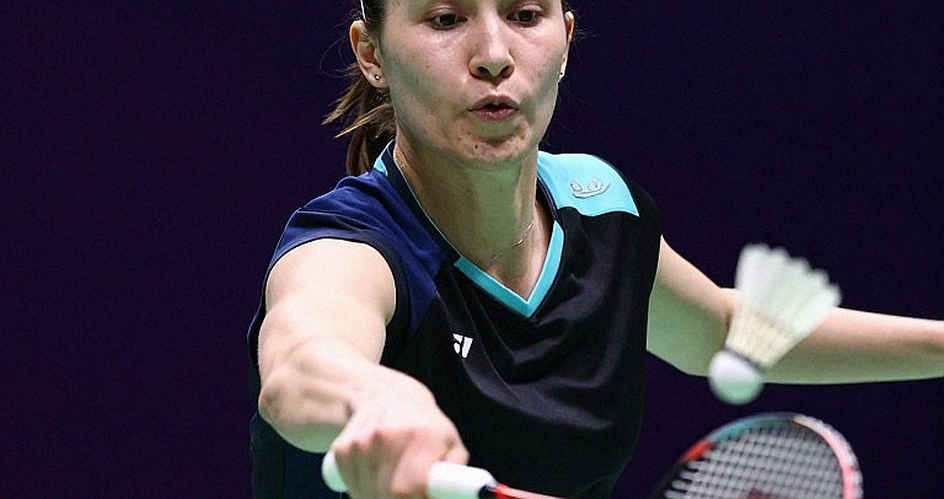
These numbers tell an interesting story. Against Choeikeewong, Chaliha won but didn't dominate – the second game ended 23-21, showing she had to win the crucial points. This demonstrates good pressure handling, but also reveals a reality: she isn't yet at a level where she can comfortably dominate a lower-ranked opponent at a lower-tier tournament.
The match against Goh Jin Wei is even more notable. Losing 10-21 in the first game, then winning 21-10 and 21-17 – the extreme score swings between games suggest one of two things: either Chaliha made excellent tactical adjustments mid-match, or her opponent physically collapsed. Goh Jin Wei is a former junior world champion who has battled heart-related health issues and made a remarkable comeback. But her history shows that stamina in three-game matches has always been a weakness. So Chaliha's comeback might reflect her opponent's decline more than a pure tactical masterclass.
Based on my experience following matches, these narrow wins at a Super 100 event – even though they are wins – are still a yellow flag. A player of top-seed caliber at the lowest World Tour tier is expected to win more comfortably. Struggling to a 23-21 second game against an opponent outside the world top 100 suggests Chaliha still has a significant gap to close against the elite group.
Super 100: Where Dreams and Risks Coexist
To understand why the issue of playing conditions at Super 100 tournaments matters so much, we need to understand where this tier sits in the global badminton ecosystem. Super 100 is the lowest of five tiers in the BWF World Tour, with the lowest prize money and ranking points. Top-20 players rarely compete – the tournament mainly attracts players ranked 50 to 150 in the world, those seeking points to improve their rankings.
This is precisely why Super 100 events often have tighter budgets for venue selection, air filtration systems, and logistics. This creates a paradox: the players who need points the most – those in the early or middle stages of their careers – are the ones competing in the most substandard conditions. Meanwhile, top-ranked players, who have more options, rarely face these issues.
Chaliha, at 26, is in her competitive prime. With a ranking fluctuating around 50-80 in the world, she needs to accumulate points at Super 100 events to improve her position – and from there, earn entries into bigger tournaments. But that very necessity makes her and other players in similar situations vulnerable to poor playing conditions. They don't have the luxury of choice – either compete in difficult conditions, or don't get the points.
Double Standards: A Systemic Issue
Chaliha's question – "Imagine if this tournament was held in India" – isn't just a rebuke. It touches on a systemic issue: is BWF applying different standards to different countries? History shows that tournaments in India have frequently been criticized for air quality, hygiene, and playing conditions. Antonsen had to pay a fine for withdrawing. Blichfeldt has publicly complained. But when an Indian player points out similar issues in Indonesia, the story takes a completely different direction.
This raises an important governance question: does BWF truly inspect venue quality consistently across all member associations, or are political and commercial factors creating a double standard? With major tournaments like Super 750 or Super 1000, media attention and pressure from top players force BWF to ensure quality. But with Super 100 events, which operate largely under the media radar, quality issues can easily go unaddressed.
Notably, India's successful hosting of the World Championships has created a benchmark effect. Indian players like Chaliha now have a recent, positive reference point for what a well-organized tournament should look like. This makes them more likely to speak up when encountering substandard conditions elsewhere.
Contrarian: A Counter-Intuitive View – When Speaking Up Is a Smart Strategy
Many might view Chaliha's public criticism of playing conditions as a risky move – potentially affecting her relationship with BWF and tournament organizers. But I'd like to offer a different perspective: this could be a smart, calculated strategy.
First, Chaliha didn't make a direct accusation. She posed a conditional question: "Imagine if..." This phrasing is far less confrontational than a direct accusation, yet still attention-grabbing. It allows her to raise the issue without being seen as violating BWF's code of conduct.
Second, praising SAI and BAI before criticizing BWF creates a deliberate contrast. Chaliha isn't a rebellious player fighting the system – she's an advocate for her national system, using that credibility to question the consistency of the international system. This gives her words much more weight than a typical complaint.
Third, and perhaps most importantly, Chaliha is positioning herself as an advocate for player welfare. In a sport where players often silently accept playing conditions for fear of career repercussions, speaking up can create a positive image – not just with fans, but with fellow players. This could elevate her standing in the badminton community, far beyond what her ranking alone could achieve.
However, there's a potential risk. If BWF perceives Chaliha as a persistent critic, it could affect her relationship with the federation. But given her diplomatic phrasing and praise for her national system, this risk appears low.
Takeaway: Sport as a Common Language – and a Common Standard
The empty microphone during the pandemic taught me: the loudest sound doesn't come from the speakers. Chaliha's question isn't just about air quality at a Super 100 event in Indonesia. It's about whether we – those who make sport, those who love sport – are willing to demand a common standard for all athletes, regardless of where they compete, at what tier, or from which country they come.
When I sat on the steps of Gelora Bung Karno Stadium in 2026, listening to Zohri talk about training barefoot on dirt tracks, I understood that sport isn't just about numbers on a ranking table. It's about people, about dreams, about fairness. And if we truly believe that sport is a common language of humanity, then we must also believe that every athlete – whether competing at a Super 1000 or Super 100 – deserves to compete in conditions that respect their health and their career.
Chaliha's question may not create immediate change. But it has planted a seed. And in sport, as in life, seeds planted at the right time have a way of finding their path to the light.